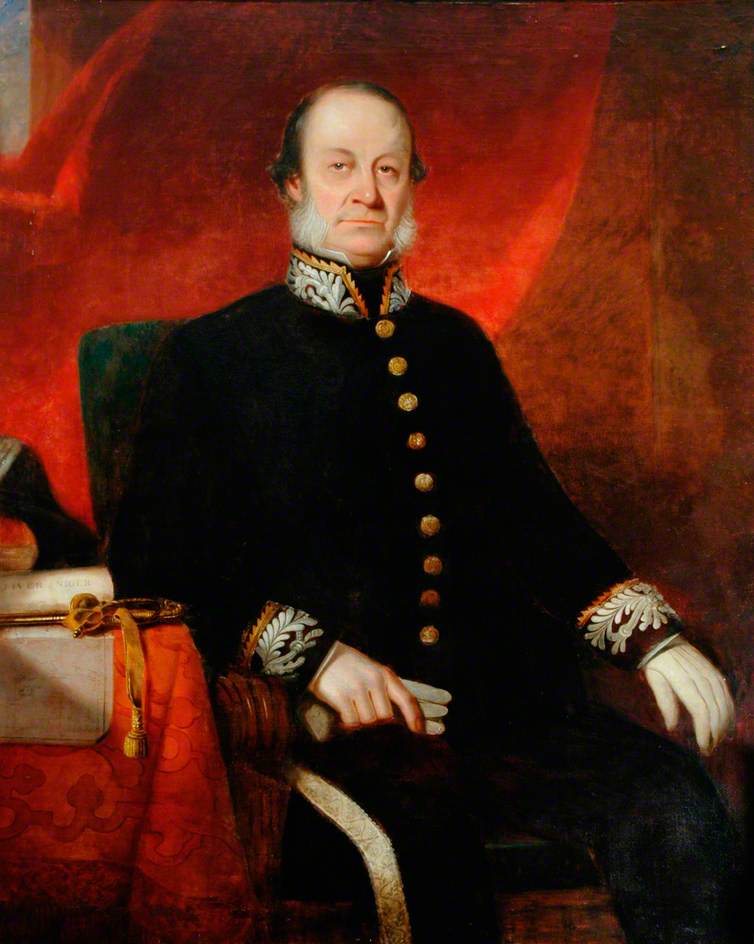
Captain John Beecroft, Esq.
Origins & Early Life (1790–1828)
- 1790 — Born near Whitby, Yorkshire; baptism recorded 2 May 1790 (son of John and Jane, a carpenter’s family). johnbeecroftAfrica
- c.1805–1814 — Captured and held by the French after being taken in a coasting vessel; imprisoned by the French until about 1814. (Document records captivity 1805–1814.) johnbeecroftAfrica
- Early career (date uncertain) — Served at sea; later commanded a transport vessel in an expedition to Greenland (document references a Greenland expedition under Sir William Parry in which Beecroft commanded transport). johnbeecroftAfrica
Arrival at Fernando Po and Local Authority (1829–1834)
- 1829 (June) — Brought to Fernando Po by Col. Nicholls; became Superintendent of works at Fernando Po. This marks the beginning of his long residence on the island. johnbeecroftAfrica
- c.1830–1832 — Acting Governor of Fernando Po (British-occupied settlement; Beecroft acted as superintendent/governor). johnbeecroftAfrica
- 1833 — After Britain withdrew effective control of Fernando Po (1833), Beecroft remained on the island as a de facto governor in a private capacity and as an influential local official. johnbeecroftAfrica
Exploration & River Voyages — Quorra / Niger / Cross / Benin (1835–1842)
- 1835 — Ascended the River Niger some 300 miles in the steamer Quorra (connected to Laird/Jamieson activities). This was part of early European efforts to chart the Niger and open trade routes.
- 1836 — Ascended the Cross River ~120 miles from Old Calabar — one of several important river reconnaissance trips. johnbeecroftAfrica
- 1839 — Robert Jamieson (Glasgow merchant, later employer of Beecroft) sent the steamer Ethiope (built 1839) to explore West African rivers — the vessel would be central to Beecroft’s work in 1840.
- April 1840 — Commanded the Ethiope up the Benin River (30-hp steamer owned by Robert Jamieson) to test whether the Benin/Warree channels could bypass the Niger Delta swamps and reach the main Niger — important geographic reconnaissance. During these explorations Beecroft named the southern branch “Ethiope” (renaming the local Olokun River) after his vessel.
- 1841 — Assisted in the withdrawal of the ill-fated government Niger expedition (the 1841 Admiralty-sponsored expedition suffered heavy fever casualties). Beecroft and the Ethiope played a rescue/assistance role for vessels such as the Albert. (His timely aid to the expedition is recorded in the file.)
- 1841–1842 — Additional ascents of the Cross River and continued river reconnaissance (document cites ascents in 1841 and again in 1842). johnbeecroftAfrica
Increasing Political Role; Spanish & British Overlap (1843–1849)
- 1843 — When Spain reasserted formal control over Fernando Po, Spain appointed Beecroft Governor (unpaid) — effectively recognizing his local authority though the island’s control was contested. He thus held Spanish gubernatorial commission while maintaining British contacts.
- c.1844–1849 — Employed (on contract) by the Royal Navy and by British interests for political missions along the Bights of Benin and Biafra because of his intimate knowledge of the rivers and coastal politics. These missions combined diplomacy, intelligence, and occasional use of force.
- 1840s (context) — During these years Beecroft built strong relationships with traders (e.g., Robert Jamieson, Macgregor Laird), naval officers, and missionaries; his role shifted from purely navigational/exploratory to political-agent and protector of British trading interests.
Consul Appointment and the Era of Gunboat Diplomacy (1849–1854)
- 30 June 1849 — Formally appointed British Consul to the Bights of Benin and Biafra (consular district stretching from Dahomey to the Cameroons), resident at Fernando Po. This appointment formalized what he had been doing—safeguarding British merchant interests and negotiating with coastal polities.
- Late 1840s–early 1850s — Political actions & regional diplomacy:
- Visits to Dahomey/Abomey and relations with King Ghezo/Gezo — Beecroft accompanied or visited Abomey (document references a trip with Commander Forbes to Abomey in 1850), observed the Dahomey amazons and court rituals, and negotiated with the king about British concerns and missionaries.
- 4 April 1851 — Beecroft signed a commercial treaty with Chiefs Jerry and Jibuffa of Jackpa (example of local treaty-making and commercial diplomacy in the delta). johnbeecroftAfrica
- Ca. 1850 — Beecroft warned missionaries at Abeokuta and assisted in defensive measures (supplying arms/ammunition) when Dahomey threatened Abeokuta; he worked with Commodore Bruce and others in regional security matters.
Lagos, Akintoye, Kosoko — The Lagos Intervention (1851) (key political episode)
- Mid–Late 1851 (December 1851) — Beecroft’s intervention at Lagos:
- The exiled Oba Akitoye (Akintoye) sought British help to regain Lagos from his rival Oba Kosoko (Kosoko was supported by Portuguese traders and resisted British anti-slave trade treaties). Missionaries at Badagry also lobbied for action. Beecroft, leveraging his command and contacts, took four warships to Lagos and demanded Kosoko’s compliance, calling a parley that escalated. Kosoko fired on the British party.
- The blockade and naval action culminated in Commodore Bruce (and the squadron) capturing Lagos on Boxing Day (26 December 1851); Akintoye was reinstated. Beecroft had no legal authority to start a war and was formally censured, but his initiative materially hastened the naval intervention. (The political cover for the attack was Akitoye’s request for aid.)
- Long-term note: these actions set a precedent for later British control and eventual annexation (Lagos proclaimed a Crown Colony in 1861). johnbeecroftAfrica
Continued Local Diplomacy; Treaties; River Influence (1852–1854)
- 1852 — Crowther and other missionaries/agents continued to work in Lagos following the intervention; Beecroft’s earlier actions influenced later consular appointments and British strategy in the region. (Context: Benjamin Campbell and later consuls.)
- 1854 (June) — The Pleiad expedition (Macgregor Laird’s steamer Pleiad) was prepared for the Niger/Tchadda; Beecroft was meant to lead the 1854 expedition, but he fell ill and died before the Pleiad reached the river. William Balfour Baikie (surgeon/naturalist) assumed command and continued the voyage inland. The death of Beecroft was a major loss to the expedition’s planners.
Death & Burial (1854)
- 10 June 1854 — John Beecroft died (document records death 10 June 1854) and was buried at Clarence (Fernando Po) under a cotton-tree at a point on the cliff—per his own directions. Baikie later recorded visiting his grave and noted the island’s regret at his death.

Tagged Stories